In today’s digital world, having a website is no longer enough. Millions of websites compete for attention every day, making it difficult for businesses to stand out online. This is where Search Engine Optimization (SEO) becomes essential. SEO helps businesses improve their visibility on search engines like Google, Bing, and Yahoo, allowing them to attract more visitors, generate leads, and increase sales.
Whether you run a small local business, an e-commerce store, or a large corporation, SEO plays a critical role in long-term business growth. A well-optimized website can help you reach potential customers exactly when they are searching for products or services related to your business.
What Is SEO?
Search Engine Optimization (SEO) is the process of improving a website’s visibility in search engine results pages (SERPs). The goal is to rank higher for relevant keywords so that more people can find your website organically without relying solely on paid advertising.
SEO involves optimizing various aspects of a website, including:
- Website content
- Keywords
- Technical performance
- User experience
- Backlinks
- Mobile responsiveness
- Page speed
When implemented correctly, SEO helps search engines understand your website and determine its relevance for specific search queries.
How Search Engines Work
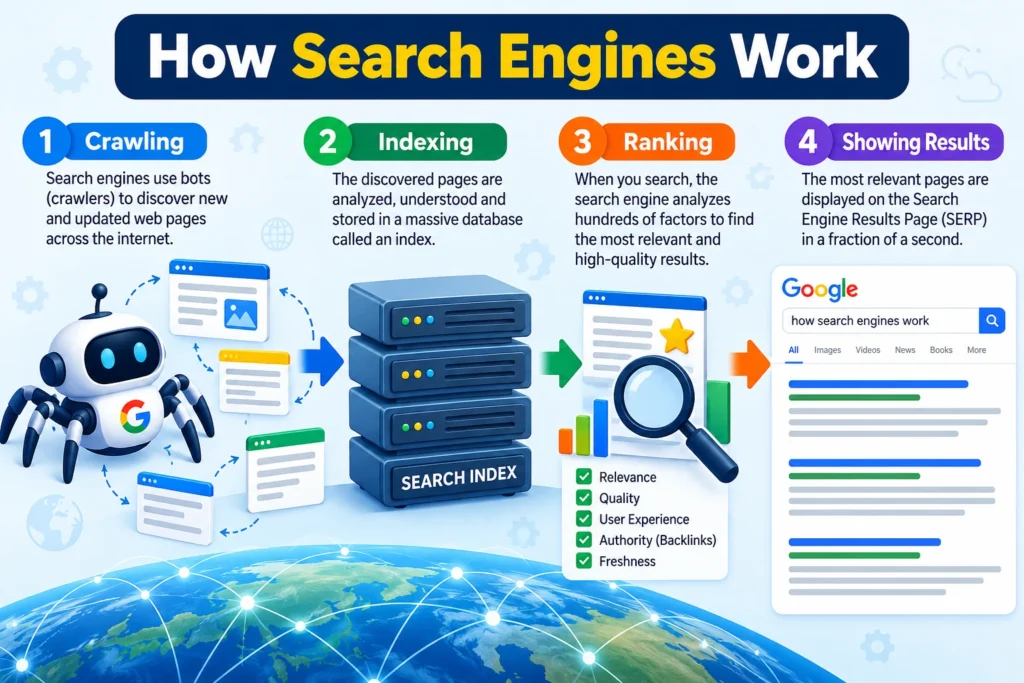
Before understanding the importance of SEO, it’s helpful to know how search engines work.
Search engines follow three main processes:
1. Crawling; Search engines use bots, also known as spiders or crawlers, to discover web pages across the internet.
2. Indexing: After crawling a page, search engines store and organize the information in their databases.
3. Ranking: When a user enters a search query, search engines analyze their index and display the most relevant results based on hundreds of ranking factors.
SEO helps optimize your website for each of these processes, making it easier for search engines to understand and rank your content.
.
Types of SEO
SEO consists of several key components that work together to improve rankings.
1. On-Page SEO
On-page SEO focuses on optimizing elements within your website.
Examples include:
- Keyword optimization
- Title tags
- Meta descriptions
- Header tags (H1, H2, H3)
- Internal linking
- Image optimization
- Content quality
2. Off-Page SEO
Off-page SEO involves activities outside your website that improve authority and trustworthiness.
Examples include:
- Link building
- Guest posting
- Brand mentions
- Social signals
- Influencer outreach
3. Technical SEO
Technical SEO ensures that search engines can efficiently crawl and index your website.
Important technical factors include:
- Website speed
- Mobile-friendliness
- XML sitemaps
- HTTPS security
- Structured data
- Crawlability
4. Local SEO
Local SEO helps businesses appear in local search results.
Examples include:
- Google Business Profile optimization
- Local citations
- Customer reviews
- Location-specific content
Why Is SEO Important for Business Growth?
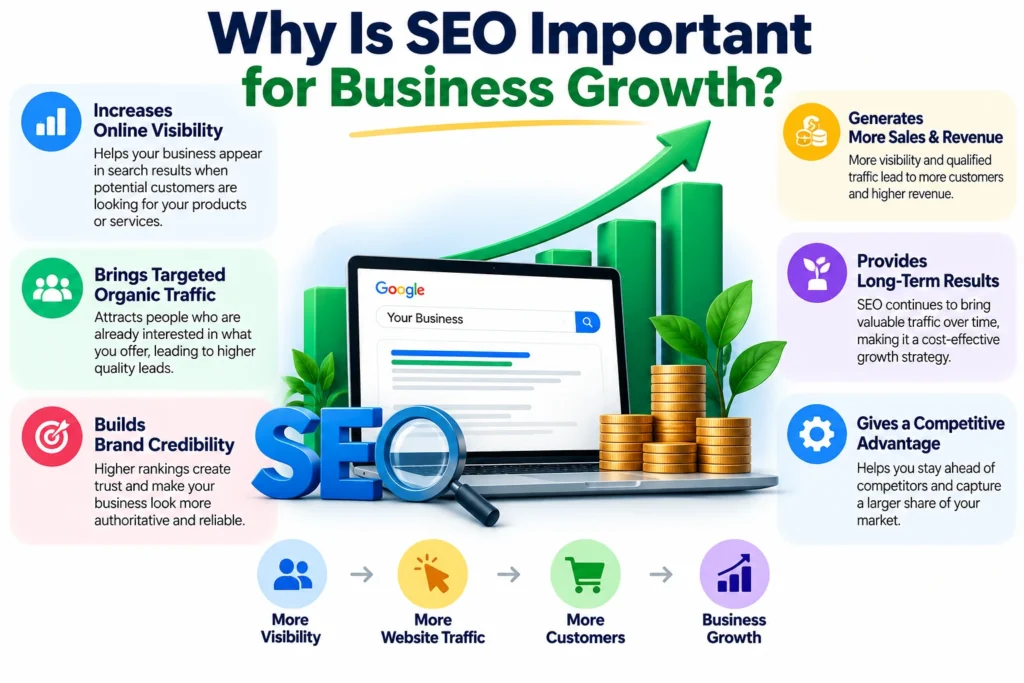
SEO offers numerous benefits that contribute directly to business growth.
Increased Website Traffic:
One of the primary benefits of SEO is increased organic traffic.
When your website ranks higher for relevant keywords, more users click on your pages. Organic search traffic is often highly targeted because users are actively looking for information, products, or services.
For example, if someone searches for:
- SEO services
- Digital marketing agency
- Link building services
- Social media marketing agency
A well-optimized website can appear in the search results and attract potential customers.
Builds Brand Visibility:
People trust businesses they frequently see in search results.
When your website consistently ranks on the first page of Google, users become familiar with your brand. Over time, this visibility helps establish credibility and authority within your industry.
Even if users do not convert immediately, repeated exposure increases the likelihood that they will remember your business when they need your services.
Generates High-Quality Leads:
SEO attracts users who already have an interest in your products or services.
Unlike traditional advertising that interrupts users, SEO targets people actively searching for solutions.
This often results in:
- Higher conversion rates
- Better lead quality
- Lower acquisition costs
For example, someone searching for “professional SEO services” is much more likely to become a customer than someone who sees a random advertisement.
Cost-Effective Marketing Strategy:
Compared to paid advertising, SEO provides long-term value.
While SEO requires an initial investment of time and resources, its benefits continue over time.
Paid ads stop generating traffic once the budget runs out. SEO, however, can continue driving visitors and leads for months or even years.
This makes SEO one of the most cost-effective digital marketing strategies available.
Improves User Experience:
Google prioritizes websites that provide a positive user experience.
SEO improvements often include:
- Faster page loading times
- Mobile optimization
- Easy navigation
- High-quality content
- Better site structure
These enhancements not only help rankings but also improve customer satisfaction and engagement.
Builds Trust and Credibility:
Users trust search engines to provide the most relevant and reliable results.
Websites that appear near the top of search results are often perceived as more trustworthy.
SEO helps build credibility through:
- High-quality content
- Authoritative backlinks
- Secure website infrastructure
- Positive user experience
Trust is a critical factor in turning visitors into customers.
Supports Every Stage of the Customer Journey:
SEO helps businesses connect with potential customers throughout their buying journey.
Awareness Stage:
Users search for information.
Example:
- What is SEO?
- Benefits of digital marketing
Consideration Stage:
Users compare options.
Example:
- Best SEO agency
- SEO vs PPC
Decision Stage:
Users are ready to purchase.
Example:
- Hire SEO expert
- SEO services near me
By creating optimized content for each stage, businesses can attract and nurture leads effectively.
Key SEO Ranking Factors
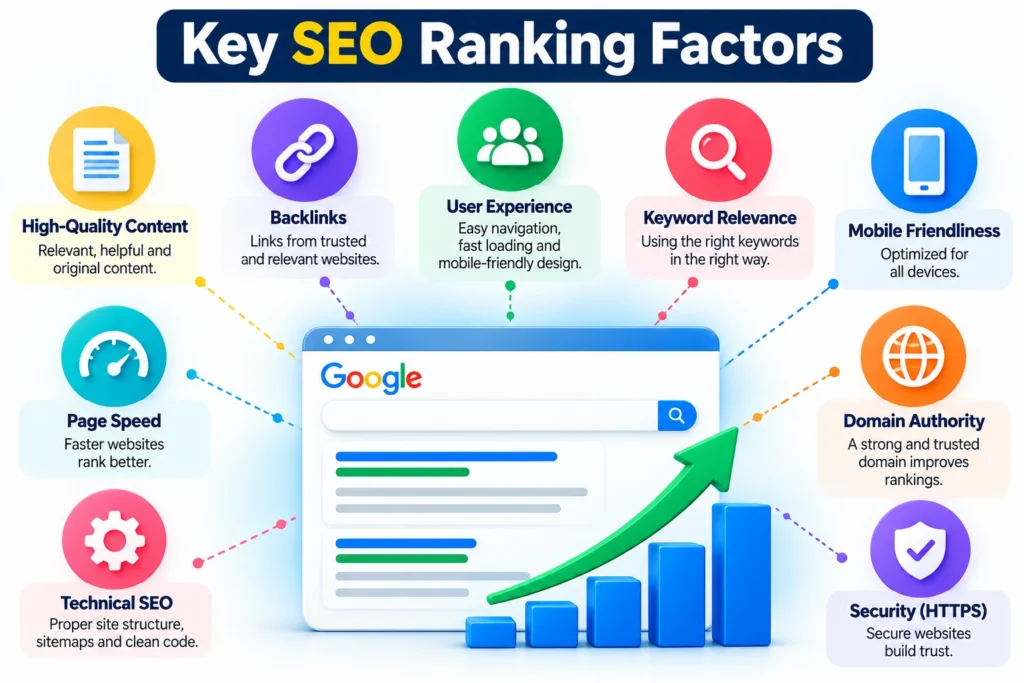
Search engines consider numerous factors when ranking websites.
Some of the most important include:
High-Quality Content:
Content remains one of the strongest ranking signals.
Effective content should:
- Answer user questions
- Provide value
- Be well-structured
- Include relevant keywords naturally
Backlinks:
Backlinks are links from other websites pointing to your site.
Quality backlinks signal authority and trustworthiness.
Common link-building strategies include:
- Guest posting
- Digital PR
- Content marketing
- Resource page outreach
Mobile Optimization:
Since most internet users browse on mobile devices, Google prioritizes mobile-friendly websites.
A responsive design helps improve both rankings and user experience.
Page Speed:
Slow-loading websites often experience:
- Higher bounce rates
- Lower engagement
- Reduced conversions
Improving page speed is essential for SEO success.
User Engagement:
Search engines monitor how users interact with websites.
Important metrics include:
- Click-through rate (CTR)
- Time on page
- Bounce rate
- User satisfaction
Better engagement often leads to improved rankings.
Common SEO Mistakes Businesses Make
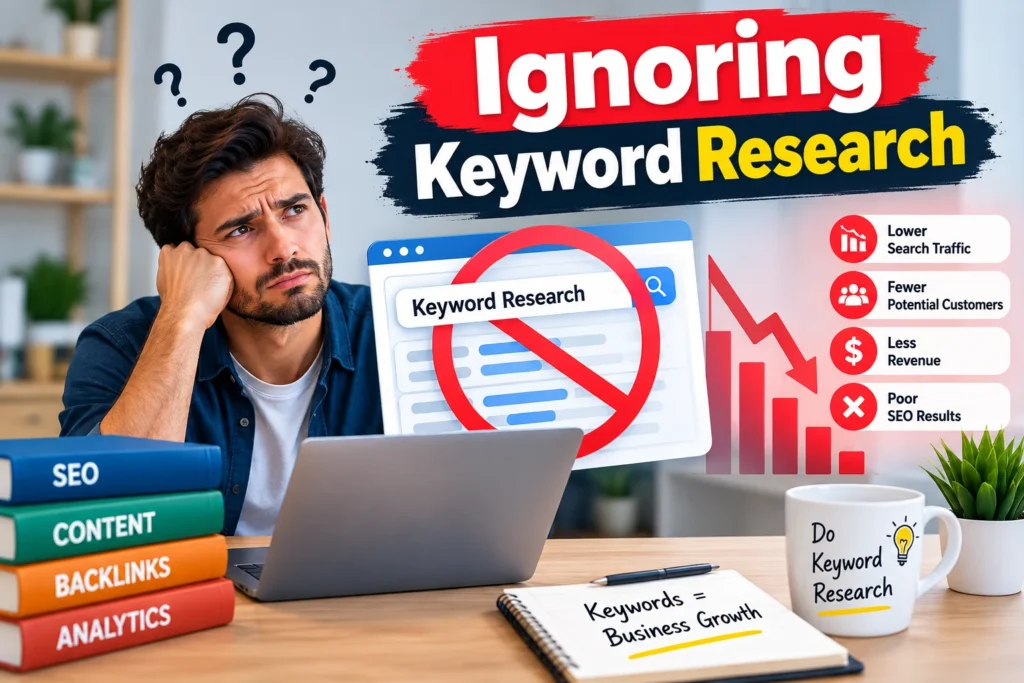
Many businesses struggle with SEO because they make avoidable mistakes.
Ignoring Keyword Research: Without proper keyword research, businesses may target terms that users rarely search for.
Publishing Thin Content: Low-quality content rarely ranks well and provides little value to visitors.
Neglecting Technical SEO; Technical issues can prevent search engines from properly indexing your website.
Poor Internal Linking; Internal links help search engines understand site structure and distribute authority throughout your website.
Not Updating Content: SEO is an ongoing process. Outdated content can gradually lose rankings over time.
How SEO Helps Small Businesses Compete
One of the biggest advantages of SEO is that it levels the playing field.
Small businesses can compete with larger companies by:
- Targeting niche keywords
- Creating valuable content
- Building quality backlinks
- Optimizing local search presence
A well-executed SEO strategy allows smaller businesses to attract customers without spending massive amounts on advertising.
The Future of SEO:
SEO continues to evolve as search engines become smarter.
Current trends include:
- AI-powered search experiences
- Voice search optimization
- User intent analysis
- Video SEO
- Core Web Vitals
- Semantic search
Businesses that stay updated with these developments will be better positioned for long-term success.
Why Choose Uplift Advertising for SEO Services?
When it comes to achieving sustainable online growth, working with an experienced SEO agency can make a significant difference. Uplift Advertising specializes in helping businesses improve search engine rankings, increase organic traffic, and generate qualified leads through data-driven SEO strategies.
At Uplift Advertising, our SEO services include:
- Comprehensive SEO audits
- Keyword research and strategy
- On-page SEO optimization
- Technical SEO improvements
- Link building and guest posting
- Local SEO services
- Content marketing
- SEO performance reporting
Our team focuses on delivering measurable results that help businesses grow their online presence and outperform competitors. Whether you’re a local business, e-commerce store, SaaS company, or service provider, Uplift Advertising can create a customized SEO strategy tailored to your goals.
For businesses looking to improve visibility, attract more customers, and increase revenue, Uplift Advertising’s SEO Services provide a reliable solution for long-term growth.
Conclusion
SEO is one of the most powerful digital marketing strategies available today. It helps businesses increase visibility, attract qualified traffic, build credibility, and generate long-term growth. Unlike paid advertising, SEO continues delivering value long after the initial investment.
From improving website performance and creating valuable content to earning authoritative backlinks and enhancing user experience, SEO offers a comprehensive approach to online success.
As competition continues to grow online, businesses that invest in SEO today will be better positioned to attract customers, strengthen their brand, and achieve sustainable growth in the future. Whether you are a startup, small business, or established company, SEO remains a critical component of a successful digital marketing strategy.